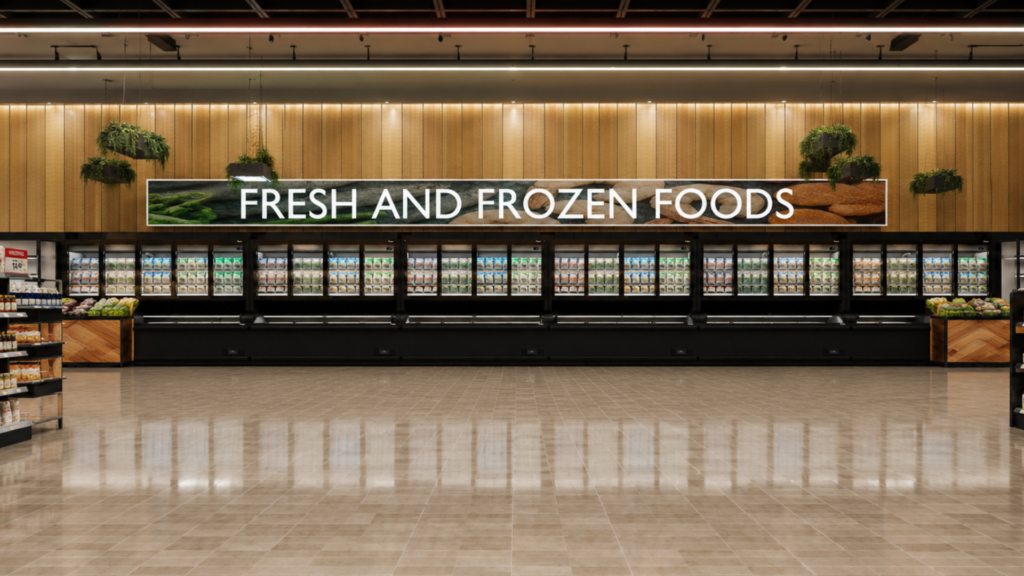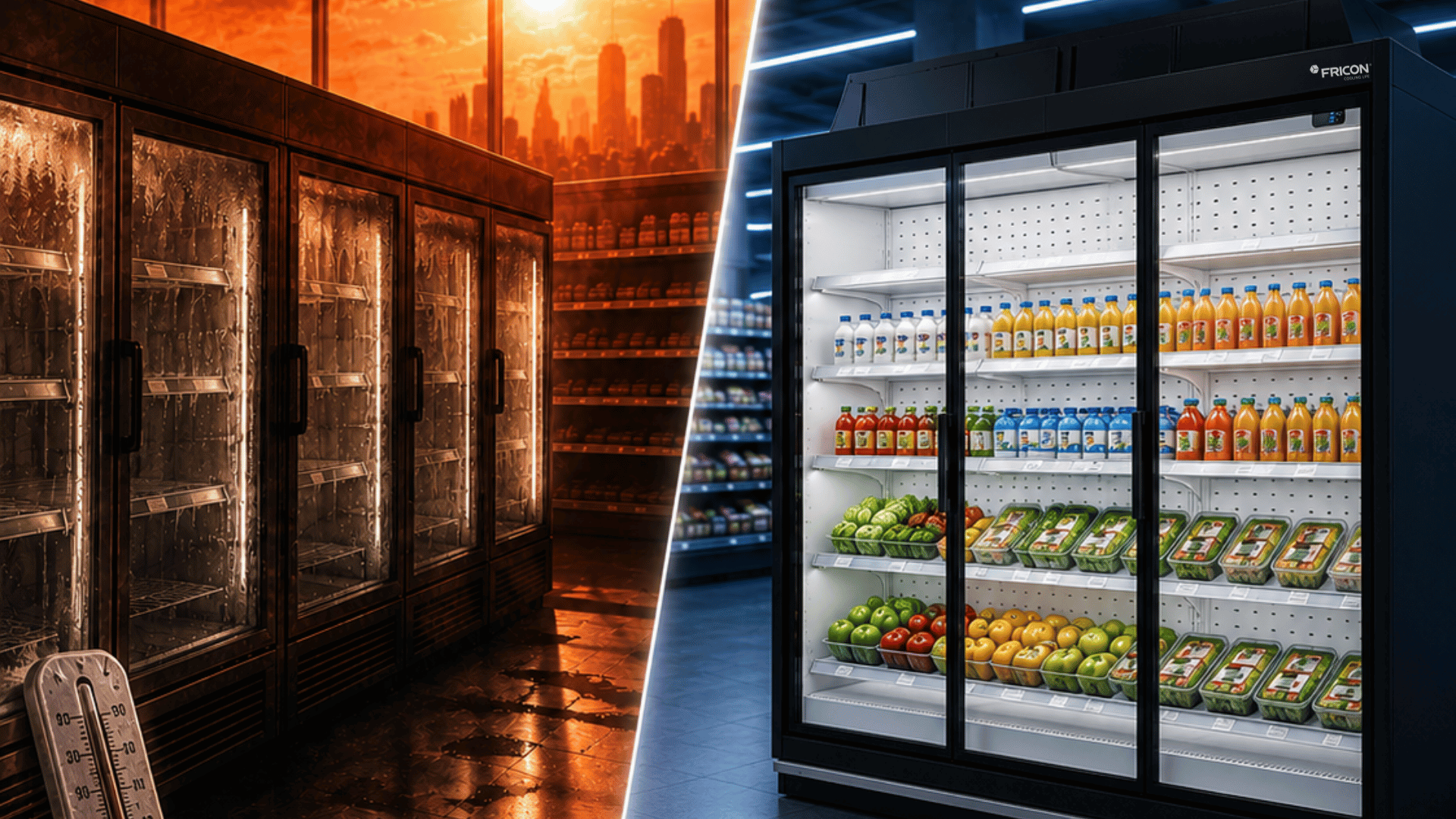
For decades, commercial refrigeration projects have followed the same model: a refrigeration plant, an extensive network of copper piping, a dedicated machine room, and complex installation processes.
This approach has helped shape modern food retail.
But the retail sector has changed.
Today, supermarkets have to adapt more quickly than ever before. Store layouts change more frequently, promotional areas shift throughout the year, neighborhood stores continue to grow, and every square meter needs to create value.
At the same time, retailers are facing increasing pressure to reduce installation times, minimize operational disruptions, and protect their investment in an increasingly unpredictable business environment.
The question is no longer:
“What kind of refrigeration system keeps the products fresh?”
The real question has become:
“Which cooling system best supports the business?”
From a fixed infrastructure to a flexible operation
Traditional remote cooling systems are based on a centralized architecture. They require a dedicated machine room, an extensive network of refrigerant piping, commissioning procedures, and a significant amount of on-site technical work before they can begin operating.
This approach remains suitable for many large-scale applications. However, it also creates a level of dependency that can limit operational flexibility.
Every change to the store’s layout becomes an engineering project.
Every relocation involves construction work.
Each expansion depends on the existing infrastructure.
Modern retail requires a different approach.
Plug-in cooling transforms the cooling system of a fixed infrastructure into modular equipment that supports business operations.
Instead of adapting the store to the refrigeration system, it is the refrigeration system that adapts to the store.
Installations measured in hours, not weeks
Speed has become one of the most valuable assets in retail.
Store renovations often need to be completed overnight.
Seasonal campaigns require temporary changes to the store layout, and convenience stores cannot afford to be closed for long periods of time.
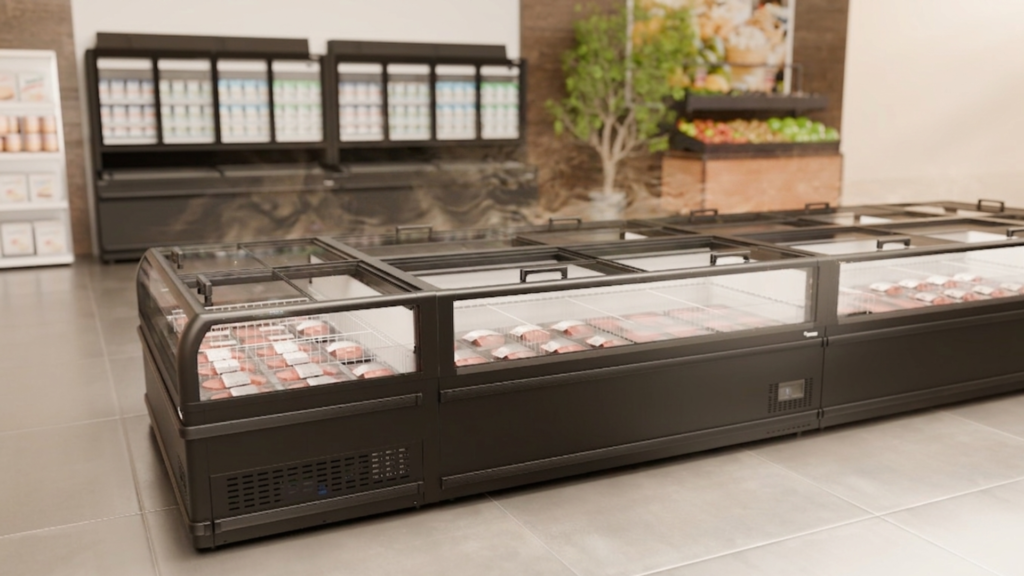
With Plug-in Technology, installation is extremely simple.
1. Install the equipment
2. Connect it to a power source appropriate for the store’s needs
3. Ensure adequate ventilation for the equipment and the store as a whole
And the equipment is immediately ready to use.
- There is no chiller unit to install.
- There is no complex network of refrigeration piping.
- There is no dedicated engine room.
- There is no lengthy commissioning process.
The result is significantly shorter implementation timelines and a very significant reduction in the impact on the store’s daily operations.
Business Continuity Through Decentralization
The Plug-in’s greatest advantage may well be its resilience. While in centralized systems various pieces of equipment depend on the same infrastructure—making any maintenance intervention or malfunction a potential source of widespread disruption—the Plug-in architecture takes a different approach: it distributes the risk. Each unit operates autonomously, ensuring that a technical issue affects only the equipment in question. The result is greater protection for refrigerated products, fewer operational disruptions, and enhanced business continuity. In an industry where every hour of downtime counts, resilience is no longer just a technical concern—it has become a competitive advantage.
Plug-in cooling introduces a modular approach.
- The equipment can be repositioned.
- Layouts can evolve.
- Stores can grow gradually.
Instead of designing today’s store to address tomorrow’s uncertainties, retailers gain the freedom to continually evolve.
A Smarter Investment
Plug-in cooling significantly reduces many of these hidden costs:
- Fewer installation requirements;
- Reduction in infrastructure investment;
- Simplified maintenance;
- Predictable implementation;
- Faster ROI.
For many retail applications, this approach results in a lower total cost of ownership over the equipment’s useful life.
Plug-in designed for heat waves and high temperatures
Heat waves are becoming more frequent, more intense, and longer-lasting. As ambient temperatures continue to rise, cooling systems are being subjected to operating conditions far beyond what was once considered normal.
Recent reports from the retail sector have highlighted how some supermarkets using CO2 and Remote systems experienced failures in their refrigeration systems during periods of extreme heat, leading to product losses, operational challenges, and increased maintenance needs. These events demonstrate that, in today’s climate, resilience is no longer optional, it is essential.
- They must ensure the continuity of operations.
- They need to reduce the risk to the business.
- They must continue to protect the products even when operating conditions become more demanding.
Today, reliability is no longer measured solely by the compressor’s efficiency.
It is indeed measured by the cooling system’s ability to keep the business running.
The future is flexible
Commercial refrigeration is evolving.
The retail sector is evolving.
Consumer expectations are also changing.
The refrigeration solutions that will define the next generation of food retail will be those capable of combining performance, flexibility, reliability, and operational simplicity.
At FRICON, we believe that refrigeration should do more than just preserve products.
It should support business growth, streamline operations, and reduce risk!